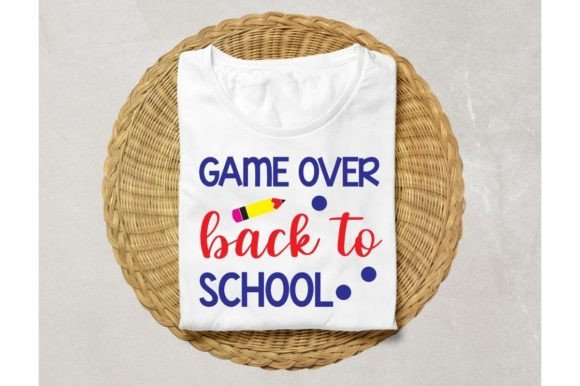
Game over Back to School, Back to Schoo
A Designer’s First Look: Playful, Punchy — But Is It Embroidery-Ready?
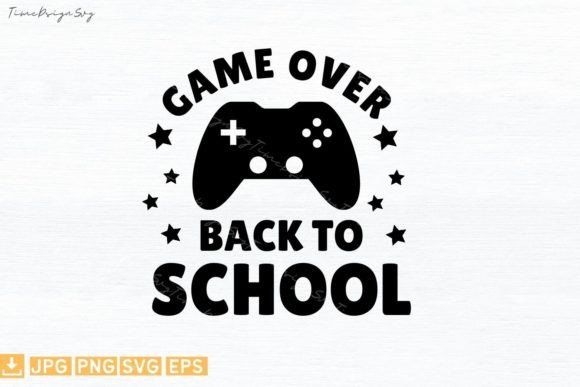
When I opened Game over Back to School, Back to Schoo, my first thought wasn’t “cute” or “trendy”—it was “how will this stitch?” As someone who’s digitized and stitched hundreds of school-themed designs for Etsy sellers, boutique apparel lines, and custom baby gifts, I know that charm on screen rarely translates one-to-one under the needle. This design leans into nostalgic gaming aesthetics—pixel-style edges, bold uppercase lettering, and a cheeky double “Back to Schoo” twist—but its real value lies in how cleanly it holds up across fabric types and hoop sizes.
Real Project Test: A Custom Embroidered Tote for a Teacher Gift
I tested Game over Back to School, Back to Schoo on a medium-weight canvas tote—60% cotton, 40% polyester—using a standard 4×4 hoop and medium-cutaway stabilizer. The layout is horizontal and compact (roughly 3.5" wide), making it ideal for center-chest placement on tees or top-center on totes. Stitching ran smoothly with no thread breaks or jump stitches, but the “O” in “Game over” and the second “o” in “Schoo” revealed subtle tension sensitivity on curved seams. On flat panels? Crisp. On slightly contoured areas like tote gussets? Slightly softened—nothing unfixable, but worth noting if you’re stitching for retail consistency.
Where It Shines—and Where It Needs Caution
Game over Back to School, Back to Schoo works best where clarity and personality matter more than fine detail:
- Custom apparel: Sweatshirts, crewnecks, and relaxed-fit tees—especially for teachers, grad students, or homeschool families who appreciate wit with warmth.
- Embroidered patch: Clean outlines and generous spacing between letters make it highly adaptable as a sew-on or iron-on patch for backpacks or denim jackets.
- Baby embroidery: On onesies or burp cloths, scale it down to ~2.75" wide—it retains legibility without overcrowding small surfaces.
- Holiday embroidery: Surprisingly effective for end-of-summer gift sets—pair it with mini pencils, erasers, or a chalkboard-style tea towel for cohesive back-to-school bundles.
Use carefully on:
- Thin or stretchy fabric: Lightweight knits may pucker around dense fill-stitch zones unless paired with tear-away + topping.
- Dark fabric: The design relies on contrast—test thread colors thoroughly. A charcoal gray satin stitch on navy can read muddy; white or bright yellow pops better.
- Caps and curved surfaces: The horizontal flow doesn’t adapt well to front-panel cap embroidery without repositioning or minor scaling—better suited for back-strap or side-embroidered caps.
- Tiny lettering expectations: This isn’t a delicate script. It’s bold, graphic, and meant to be seen—not whispered. Don’t force it into a 1.5" hoop for infant hats.
Design Assets That Build Trust—Not Just Traffic
As an embroidery product reviewer, I pay close attention to how a design influences perceived value. Game over Back to School, Back to Schoo reads as handmade—not mass-produced—because of its intentional asymmetry and playful imperfection (that repeated “o” isn’t a typo; it’s a wink). That authenticity resonates with buyers browsing Etsy or local craft fairs. When stitched cleanly, it elevates a plain tote into a conversation starter. When rushed or poorly stabilized? It flattens into generic clipart. The difference isn’t in the file—it’s in the execution.
Practical Notes Every Embroiderer Should Check Before Stitching
This is a digital embroidery file—not physical merchandise—so your success hinges on prep:
- Always test on scrap fabric first, especially if using textured weaves (like linen-look tea towels) or blended fabrics (cotton-poly blends behave differently than 100% cotton).
- Review stitch density: High-density fill areas (like the “G” and “A” in “Game”) may require lighter thread tension or reduced density settings for softer drape on apparel.
- Confirm hoop size compatibility: While the design fits comfortably in a 4×4, verify your machine’s native format support—SVG and EPS files need conversion to PES, DST, or JEF before stitching.
- Inspect small details: Zoom in on vector layers—check for stray anchor points or overlapping paths that could cause digitizing hiccups during auto-conversion.
- Test black-and-white mockups: Does it retain impact in monochrome? Yes—this design thrives without color reliance, making it flexible for single-thread branding or cost-conscious small-batch runs.
- Stabilizer choice matters: Use cutaway for knits, tear-away for stable wovens, and lightweight fusible for lightweight chambray or baby quilting cotton.
- Licensing clarity is non-negotiable: Since this is sold as a T-Shirt Design and Graphics file, confirm whether commercial use (e.g., selling finished embroidered sweatshirts on Etsy) is permitted. When in doubt, contact the seller—don’t assume.
Final Thought: A Witty Anchor for Your Back-to-School Line
Game over Back to School, Back to Schoo isn’t just another school-themed graphic—it’s a tone-setter. It signals levity, nostalgia, and approachability. For craft businesses building seasonal collections, it pairs naturally with minimalist pencil icons, chalk-drawn borders, or soft watercolor-style backing. For personalization shops, it’s a fast-turnaround favorite for teacher appreciation gifts or sibling matching sets. Just remember: its strength lies in confident simplicity—not complexity. Respect the scale, honor the fabric, and let the humor speak for itself. Done right, it won’t just say “back to school.” It’ll say, “we’re ready—and we’re smiling about it.”